
Table of Contents
- • Early Life
- • Entry into the Freedom Movement
- • The Bardoli Satyagraha
- • Role in India's Independence
- • He participated in major freedom movements, including:
- • Uniting India
- • Leadership Qualities
- • Determination
- • Courage
- • Discipline
- • Patriotism
- • Lessons from Sardar Patel's Life
- • 1. Unity Is Strength
- • 2. Leadership Requires Courage
- • 3. Serve Society
- • 4. Stay Committed to Your Goals
- • 5. Put the Nation First
- • The Statue of Unity
- • Legacy
- • Conclusion
Sardar Vallabhbhai Patel: The Iron Man Who United India
India's journey to independence was shaped by many remarkable leaders, but few contributed as significantly to the nation's unity as Sardar Vallabhbhai Patel. Revered as the "Iron Man of India," Patel's courage, leadership, and unwavering commitment helped lay the foundation of modern India.
His life remains a powerful example of dedication, discipline, and service to the nation.
Early Life
Sardar Vallabhbhai Patel was born on October 31, 1875, in Nadiad, Gujarat, India. He belonged to a humble farming family and grew up learning the values of hard work, honesty, and perseverance.
Despite limited resources, Patel was determined to pursue education. He excelled academically and later studied law, becoming one of the most respected lawyers in Gujarat.
His success as a lawyer brought him recognition, but his heart was devoted to serving the people of India.
Entry into the Freedom Movement
Patel's life changed when he met Mahatma Gandhi. Inspired by Gandhi's principles of truth and non-violence, he joined the Indian freedom struggle.
He actively participated in movements against British rule and encouraged people to fight injustice through peaceful resistance.
One of his earliest achievements came during the Kheda Satyagraha in 1918, where he organized farmers protesting against unfair taxes imposed by the British government.
His leadership helped secure relief for struggling farmers and established him as a prominent national leader.
The Bardoli Satyagraha
In 1928, Patel led the Bardoli Satyagraha, a movement against increased land taxes in Gujarat.
Under his leadership, farmers united and peacefully resisted the tax hike. The movement succeeded, forcing the British authorities to withdraw their decision.
Impressed by his leadership and determination, the people of Bardoli honored him with the title "Sardar," which means leader or chief.
From that day forward, he became known as Sardar Vallabhbhai Patel.
Role in India's Independence
Patel became one of the most influential leaders of the Indian National Congress and worked closely with Mahatma Gandhi and Jawaharlal Nehru.
He participated in major freedom movements, including:
- • Non-Cooperation Movement
- • Civil Disobedience Movement
- • Quit India Movement
Throughout the struggle, Patel was imprisoned multiple times by British authorities, but his commitment to India's independence never weakened.
When India finally gained independence on August 15, 1947, Patel emerged as one of the nation's most trusted leaders.
Uniting India
Patel's greatest achievement came after independence.
At the time, India consisted of more than 560 princely states. These states had the option to join India, join Pakistan, or remain independent.
Many feared that India would become fragmented and unstable.
As India's first Deputy Prime Minister and Home Minister, Patel took on the enormous challenge of integrating these princely states into the Indian Union.
Through diplomacy, negotiation, and strong leadership, he persuaded almost all princely rulers to join India.
His successful integration of states such as Hyderabad, Junagadh, and others ensured the territorial unity of the nation.
This historic achievement earned him the title:
"The Iron Man of India."
Without Patel's efforts, modern India's map might look very different today.
Leadership Qualities
Sardar Patel possessed several qualities that made him an exceptional leader:
Determination
Once he committed to a goal, he pursued it with unwavering focus.
Courage
He never hesitated to take difficult decisions in the national interest.
Discipline
Patel believed in hard work, responsibility, and efficient administration.
Patriotism
His actions were always guided by his love for India and its people.
Lessons from Sardar Patel's Life
1. Unity Is Strength
Patel believed that a united nation is stronger than a divided one.
2. Leadership Requires Courage
Great leaders must make difficult decisions when necessary.
3. Serve Society
Success becomes meaningful when it benefits others.
4. Stay Committed to Your Goals
Persistence and dedication can overcome even the toughest challenges.
5. Put the Nation First
Patel consistently placed national interests above personal ambitions.
The Statue of Unity
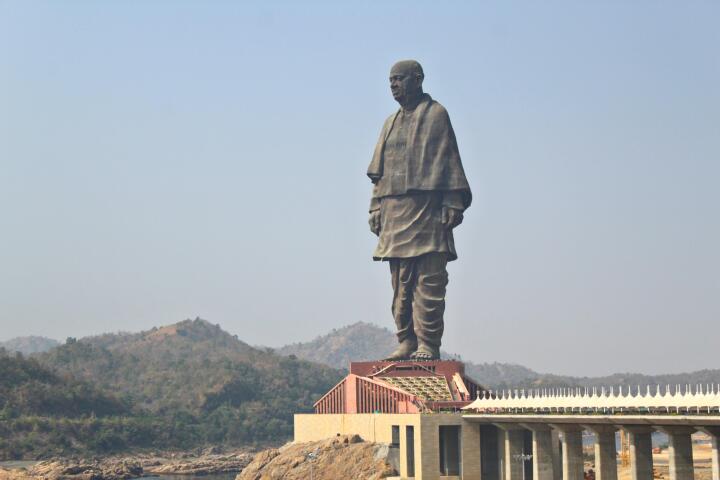
To honor Sardar Patel's contributions, India built the Statue of Unity in Gujarat.
Standing at 182 meters, it is the world's tallest statue and symbolizes Patel's vision of a united and strong India.
The monument attracts visitors from across the world and serves as a reminder of his extraordinary legacy.
Legacy
Sardar Vallabhbhai Patel passed away on December 15, 1950.
Although he is no longer with us, his contributions continue to shape India's future. His efforts preserved national unity during one of the most challenging periods in Indian history.
Today, he is remembered not only as a freedom fighter but also as the architect of India's political integration.
Conclusion
Sardar Vallabhbhai Patel's life is a story of courage, leadership, and patriotism. From leading farmers' movements to uniting hundreds of princely states, he played a crucial role in building modern India.
His dedication to national unity and public service continues to inspire citizens, leaders, and young people across the country. The legacy of the Iron Man of India reminds us that determination, integrity, and selfless service can change the course of history.

Was this article helpful?
Help us improve by rating this article.